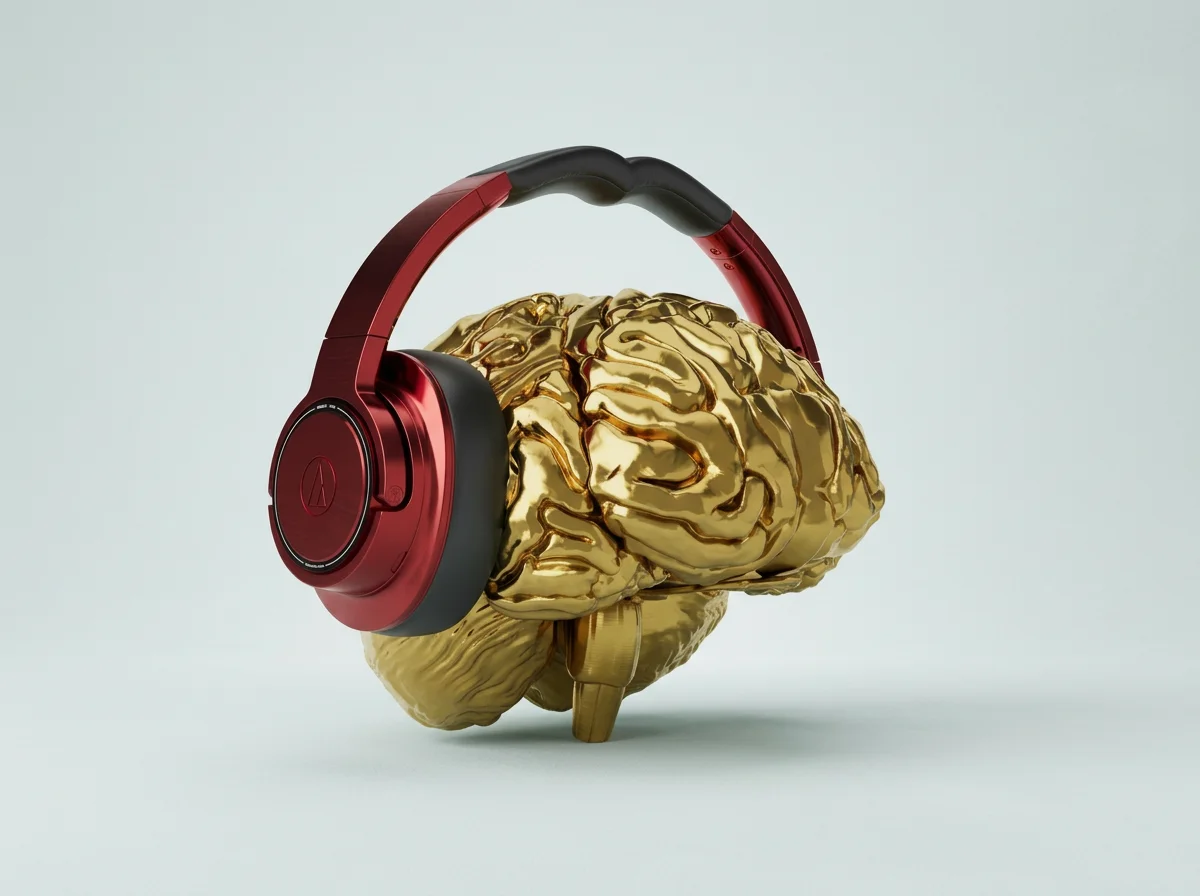
The Hearing-Brain Connection: Why Untreated Hearing Loss Affects Memory
It's not just about missing words. Your brain may be working overtime to fill in the gaps — and that effort has to come from somewhere.
"Where did I put my keys?" gets a laugh at the dinner table. So does "wait, what did you just say?" But patients are sometimes surprised to learn that these two seemingly unrelated, joked-about moments are more connected than they realize — and that the connection runs through the brain, not just the ears.
I want to be upfront about something before we go further: this is not an article meant to scare you. Dr. Jonell's approach has never been about fear-based pressure, and I'm not going to start here. But the research on hearing and brain health has grown substantially in the last few years, and I think it deserves an honest, clear-eyed explanation — including what it does and doesn't prove, and what you can actually do about it.
So let's walk through it: why hearing and memory are linked, what's actually happening in the brain, and why treating hearing loss is one of the more promising, genuinely modifiable things within your control.
The Link Is Real — But It's Not a Life Sentence
The 2024 update to The Lancet's standing Commission on dementia — one of the most comprehensive, frequently cited bodies of research on modifiable dementia risk — found that people with hearing loss have roughly 1.37 times the risk of dementia compared to people with normal hearing, and that risk increases gradually: every 10-decibel drop in hearing ability was associated with 4% to 24% higher dementia risk across the studies reviewed.1
That same Commission was clear that this estimate is conservative, since it includes everyone with hearing loss regardless of whether they used hearing aids. When researchers looked specifically at hearing aid users across 8 studies and nearly 127,000 participants, the picture looked meaningfully better: 19% lower risk of cognitive decline and 17% lower risk of dementia compared to people whose hearing loss went uncorrected.1
In other words: hearing loss is associated with higher risk, but it's one of the risk factors you can actually do something about — and the data suggests doing something about it matters.
Why Would Ears Affect Memory?
This is the part patients usually want explained. If hearing happens in the ears, why would it touch the parts of the brain responsible for memory? Researchers have proposed a few overlapping explanations.
Cognitive Load
Straining to decode muffled speech taxes the same general brain resources your memory and thinking rely on — effort spent decoding sound is effort not spent encoding memory.2
Sensory Deprivation
Chronically reduced sound input may lead to measurable changes in the brain's cortical networks over time — a "use it or lose it" effect on auditory and nearby brain regions.2
Shared Pathology
In some cases, the same underlying issue — vascular changes or broader neurodegeneration — may independently affect both hearing and cognition at the same time.2
Social Disengagement
Hearing loss often leads people to withdraw from conversation and social activity, and reduced social engagement is independently linked to cognitive decline.2
A 2024 brain-imaging study published in the Journal of Neurology, Neurosurgery and Psychiatry followed 287 adults all born the same week in 1946. Those with hearing impairment at age 70 showed faster rates of overall brain atrophy — and worse hearing specifically predicted faster atrophy of the hippocampus, the brain's primary memory center.3 These effects held even after accounting for other known Alzheimer's-related markers, suggesting hearing loss may affect memory through its own distinct pathway.
What Happens When You Treat It
The most direct evidence on this question comes from the ACHIEVE trial, a major randomized study published in The Lancet in 2023 — and I want to walk through it honestly, including the parts that complicate a simple headline.
ACHIEVE followed nearly 1,000 older adults over three years, comparing a hearing intervention (hearing aids plus counseling) against a health education control. Across the full study group, the hearing intervention was not significantly better than the control at slowing cognitive decline. But within a specific subgroup — participants drawn from an existing heart-health study, who were older and had more dementia risk factors to begin with — the hearing intervention reduced cognitive decline by 48% over three years.4
Here's how I think about it with my own patients: even setting the dementia research aside entirely, treating hearing loss improves conversation, relationships, safety, and independence today. The possibility of a meaningful brain-health benefit, especially if you have other risk factors, is a genuine bonus — not the only reason to do it.
A Note From Dr. Jonell
I never want this research used to scare anyone into my office. I want it used to inform you — so that getting a hearing test in your 50s or 60s feels as routine as getting your blood pressure checked, not something you wait on until it's "bad enough."
If you're noticing changes, or you simply haven't had a baseline hearing test in a while, let's talk. No pressure, no hard sell — just an honest look at where things stand.
Schedule a Free Consultation →References
- Livingston, G., Huntley, J., Liu, K. Y., Sommerlad, A., Mukadam, N., et al. (2024). Dementia Prevention, Intervention, and Care: 2024 Report of the Lancet Standing Commission. The Lancet. thelancet.com
- Motta, G., Tortoriello, G., & Testa, D. (2026). Is Age-Related Hearing Loss a Modifiable Risk Factor for Cognitive Decline? Mechanisms, Evidence, and Future Directions. Audiology Research, 16(2), 61. mdpi.com
- Parker, T. D., Hardy, C., Keuss, S., Coath, W., Cash, D. M., et al. (2024). Peripheral Hearing Loss at Age 70 Predicts Brain Atrophy and Associated Cognitive Change. Journal of Neurology, Neurosurgery and Psychiatry, 95(9), 829–832. pmc.ncbi.nlm.nih.gov
- Lin, F. R., Pike, J. R., Albert, M. S., Arnold, M., Burgard, S., et al. (2023). Hearing Intervention Versus Health Education Control to Reduce Cognitive Decline in Older Adults With Hearing Loss (ACHIEVE): A Randomised Controlled Trial. The Lancet. achievestudy.org