
‘Normal Hearing’ Test Results Don’t Equate To Healthy Hearing

Trust your instincts; hearing difficulties can make you feel like you’re going crazy, as can the wrong hearing specialist.
All too often, individuals who self-report hearing difficulties and feel confused, hopeless, and even a little crazy after they seek help with their hearing health reach out to us in desperation and exasperation.
For instance, I recently received this message from an active, working woman in her 70s who reached out, frustrated with the impact her hearing difficulties are making on her day-to-day activities:
A well-known hearing aid place told me that because my hearing test only showed minor hearing loss in my left ear, hearing aids wouldn’t help me. However, I frequently mishear words , and as a teacher, it’s impacting my job.
For example, recently someone said “eighty-one” nine times in a class, but it turned out they were actually saying “anyone.”
Is there anything you can do?
Many factors drive this frustration, but the two biggies are as follows:
#1 Audiologists or hearing specialists who don’t perform comprehensive hearing exams.
#2 Hearing amplification devices aren’t correctly programmed for the individual’s unique hearing needs.
What’s hard to swallow is that according to a 2019 study reported in the journal Audiology Today, “fewer than 15 percent of audiologists perform SIN (Sound-In-Noise) tests routinely.”1 This is one of the basic tests all audiologists should continue with once a pure-tone (which tells us the lowest sound you can hear) hearing test comes back within normal limits.
Here’s What Should Happen When You “Self-Report” Hearing Difficulties
The good news is that numerous studies have found that nearly 30% of adults with hearing test results within the normal range who self-report hearing difficulties have a hearing condition that can be identified through proper testing.2 Another study by Roup et al. 3 concluded that just over 70% of folks who “self-reported” hearing difficulties find that properly programmed hearing aids help a lot in noisy settings and that they have experienced significant improvements in their quality of life overall.
So, how did I respond? I’m sure you can guess, but I need you to understand how easy it can—and should—be.
Yes, I can help.
Here's what I recommend:
We can set up some hearing aids for you for a few weeks and see how it goes. Amplifying speech sounds without making everything too loud is possible with proper programming, and that’s a big difference between finding a hearing aid dispenser versus a hearing specialist, such as an audiologist.
Sometimes, it turns out to be an auditory processing issue more than a cochlear issue that causes hearing difficulties. However, studies are finding that amplification can be helpful for people with even normal hearing thresholds.
First, we need to complete a comprehensive evaluation to determine your hearing sensitivity and how you hear speech in quiet and noisy environments.
However, just because the process can be pretty straightforward, let’s still take a closer look at some of the specifics of possible contributing factors that may be causing your hearing difficulties.
The Difference Between Auditory Processing Disorders and Cochlear Issues
AUDITORY PROCESSING Disorders (APD):
Auditory processing disorders encompass a range of auditory challenges. The common theme is that they become more noticeable in noisy environments, such as rooms with an echo, background noise, or when listening to complex information.
APD can be developed later in life as a result of strokes, tumors, head trauma (TBIs), and degenerative diseases such as multiple sclerosis.4
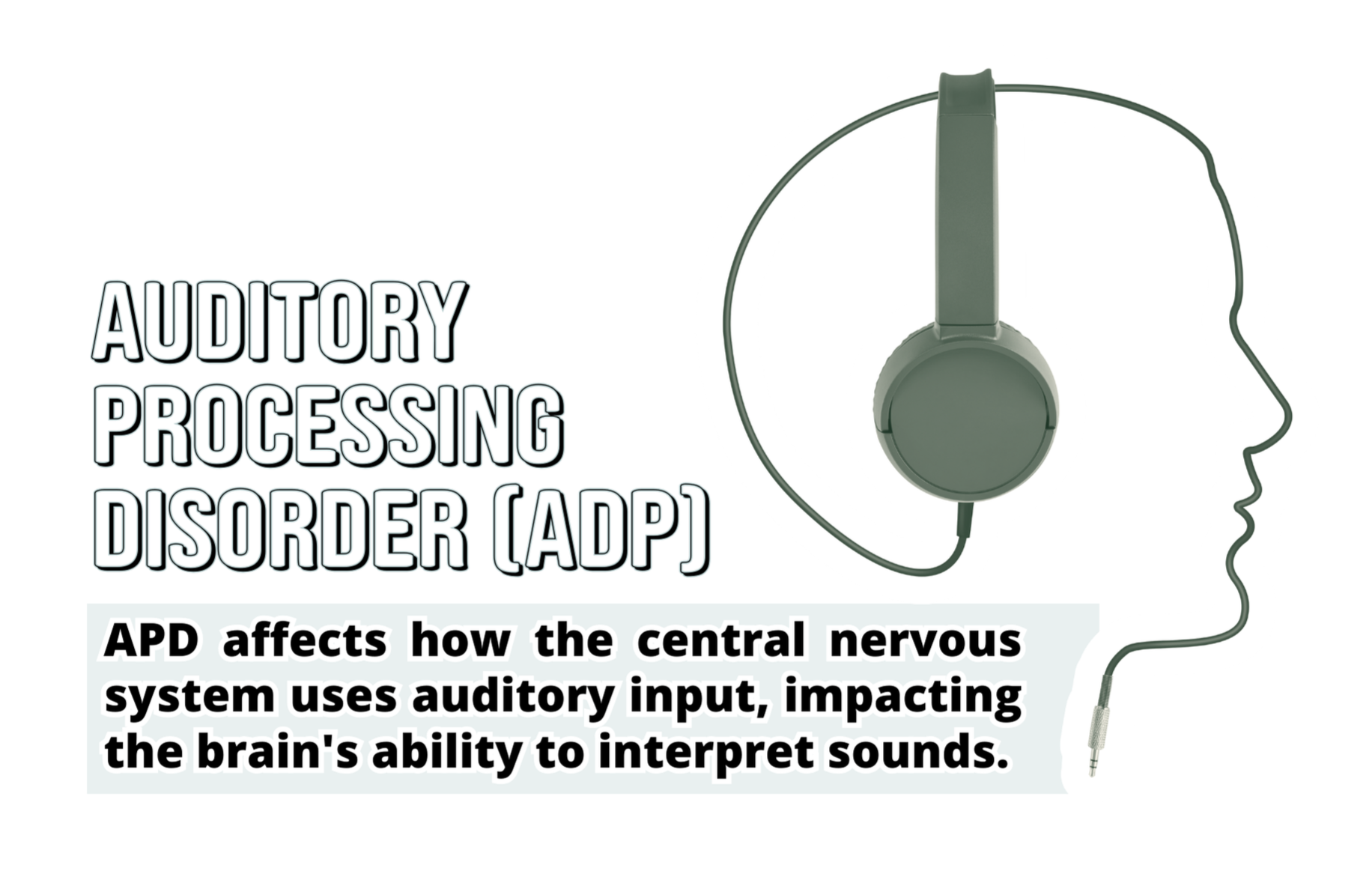
The challenge is that APD affects how the central nervous system uses auditory input, impacting the brain's ability to interpret sounds. This is why, despite a word being spoken loud and clear, the brain may need to pick up on subtle differences in the sounds of words.
i.e., “Eighty-One” can sound an awful lot like “anyone”!
If you have an APD, you may experience difficulties in any of the following circumstances:
Hearing speech in noise (SIN)
Following Instructions
Paying attention
Learning, especially new languages
Understanding what’s said, especially jokes, idioms, and figurative language
Remembering what’s said
The American Academy of Audiology explains that you’ll often need more time to process auditory information as you ‘mishear’ what’s said and look for visual cues to help fill in the blanks and gain a complete understanding.5
How do you know if you have APD?
So, this is the tricky part, as testing for APD is highly specialized. Start the process of seeking help with your hearing by first consulting a trusted audiologist. While not all of us perform specialty testing to diagnose APD, a comprehensive battery of hearing tests can be enlightening. There are even some apps and websites that can help ‘train’ you to hear certain sounds, and it is a great place to start, even without a definitive diagnosis.
The first task is to conduct a comprehensive hearing evaluation, which assesses your hearing levels, your ability to interpret words in isolation, and the impact of noise on your ability to process and understand speech. Some dispensers and even some audiologists may tell you that a very mild or borderline mild hearing loss does not indicate the need for treatment. That is not necessarily true. YOU know you have a problem, and having someone tell you ‘it’s all in your head’ is NOT okay!
At Audiology Northwest, we administer the QuickSIN (Quick Speech-in-Noise) test regularly to help identify potential disorders. The Quick Speech-in-Noise (SIN) test is an auditory assessment tool used to evaluate your ability to understand speech in the presence of background noise, making it especially handy for identifying hearing impairments and assessing the effectiveness of hearing aids or cochlear implants.
From there, if needed, we can refer you to a specialist who can conduct the advanced specialized testing.
Moreover, your audiologist will need to consider your unique hearing experience, so an extensive interview is part of the evaluation process. The more details you can provide about your hearing difficulties, the better. We offer in-home services, which allow us to come to ‘your hearing place’ to test, diagnose, and optimize your use of hearing amplification devices.
COCHLEAR ISSUES:
Your auditory nerve, the cochlea, converts sound waves and sends electrical signals (synapses) to your brain. However, when there’s a faulty connection between the tiny hair cells within the cochlea, you can experience a phenomenon known as “hidden hearing loss” (a.k.a. cochlear synaptopathy).
This is similar to sensorineural hearing loss, which is caused by exposure to loud noises, aging, degenerative diseases, certain medications, head trauma, infections, and, according to the Handbook of Clinical Neurology, even hypoxia — a condition caused by low levels of oxygen in your body tissues.6
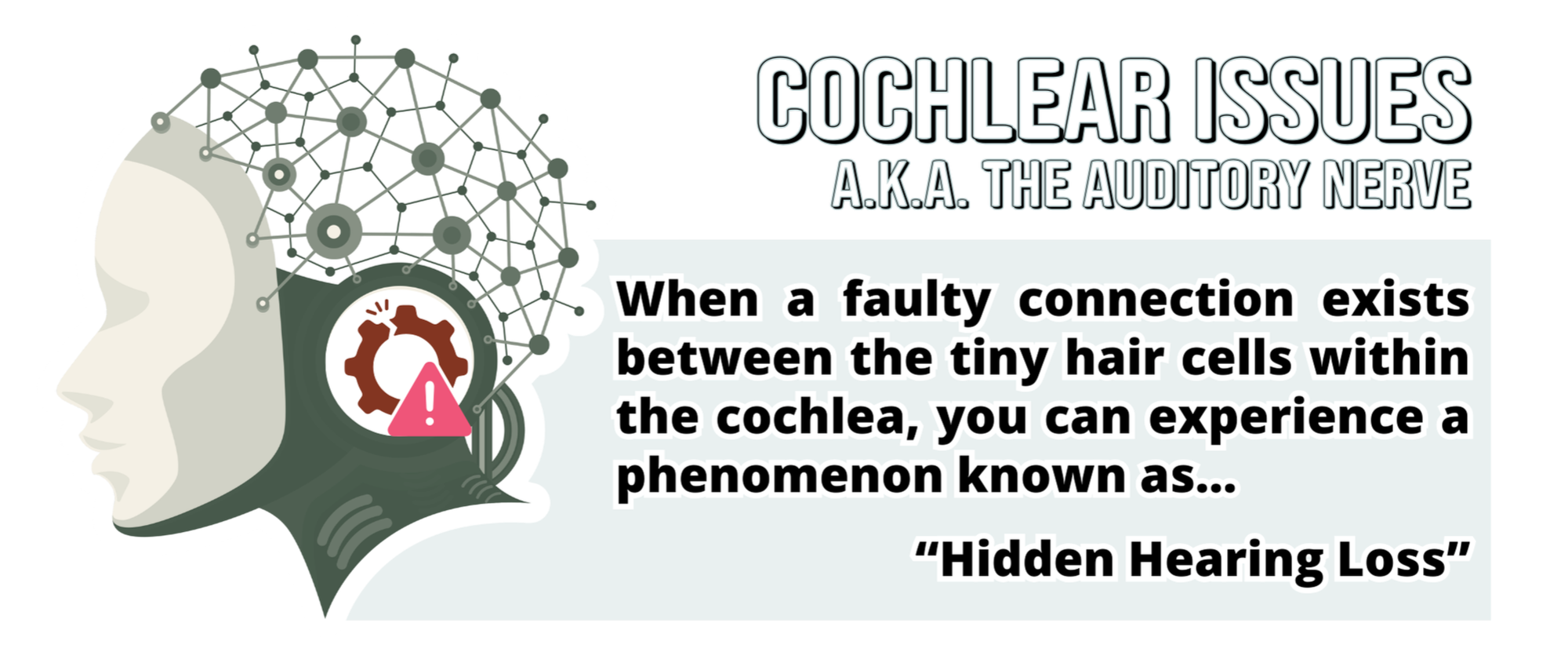
Hidden hearing loss can exhibit difficulties such as:
Hearing in noisy environments
Focusing in noisy environments
Misinterpreting what’s being said
Tinnitus, or ringing in the ears
Dizziness can also be a symptom
Like with APD, there aren’t specific guidelines for diagnosing hidden hearing loss, so find an audiologist who will listen to you, pursue the root of your hearing difficulties, and perform a comprehensive hearing exam.
Advocate For Your Hearing Health
If you think you’re experiencing hearing difficulties, you’re probably right; after all, you know your body best!
Even if you’ve been told you don’t have any hearing loss… STOP DOUBTING YOURSELF (and yes, I’m yelling, but only so you hear me clearly 😉). You deserve to live your best life, and we can help you regain your ability to engage in any environment, reclaim your life, and even potentially protect against cognitive decline associated with hearing loss and neurocognitive disorders.7
Schedule a comprehensive hearing test with Dr. Jonell, Northwest Audiology’s trusted audiologist. Our in-home concierge service can make all the difference in diagnosing your unique hearing needs, finding the right solution, and programming any assistive devices, such as hearing aids, so they actually work for you.
In the meantime, if you’d like to further self-assess your hearing, specifically in Sound-In-Noise (SIN) environments, below is a great test to start with:
SIN Hearing Test — click here to take this short test now.
Life… It’s worth hearing!
Ready to schedule an appointment? I’m open and accepting new patients. Click here to schedule with me now.
Want to hear all the good stuff? Sign up to receive my newsletter by clicking here.
If you need to reach me ASAP, call me. I’m here to help! Dr. Jonell @ 509-994-4395.
RESOURCES:
Roup CM, Post E, Lewis, J. Mild-gain hearing aids as a treatment for adults with self-reported hearing difficulties. J Am Acad Audiol. 2018;29(6):477-494.
Auditory Processing Disorders - American Academy of Audiology The American Academy Of Audiology
Deafness in cochlear and auditory nerve disorders - PubMed (https://www.sciencedirect.com/science/article/abs/pii/B9780444626301000275?via%3Dihub)
Beck et al https://medcraveonline.com/JOENTR/JOENTR-10-00345.pdf